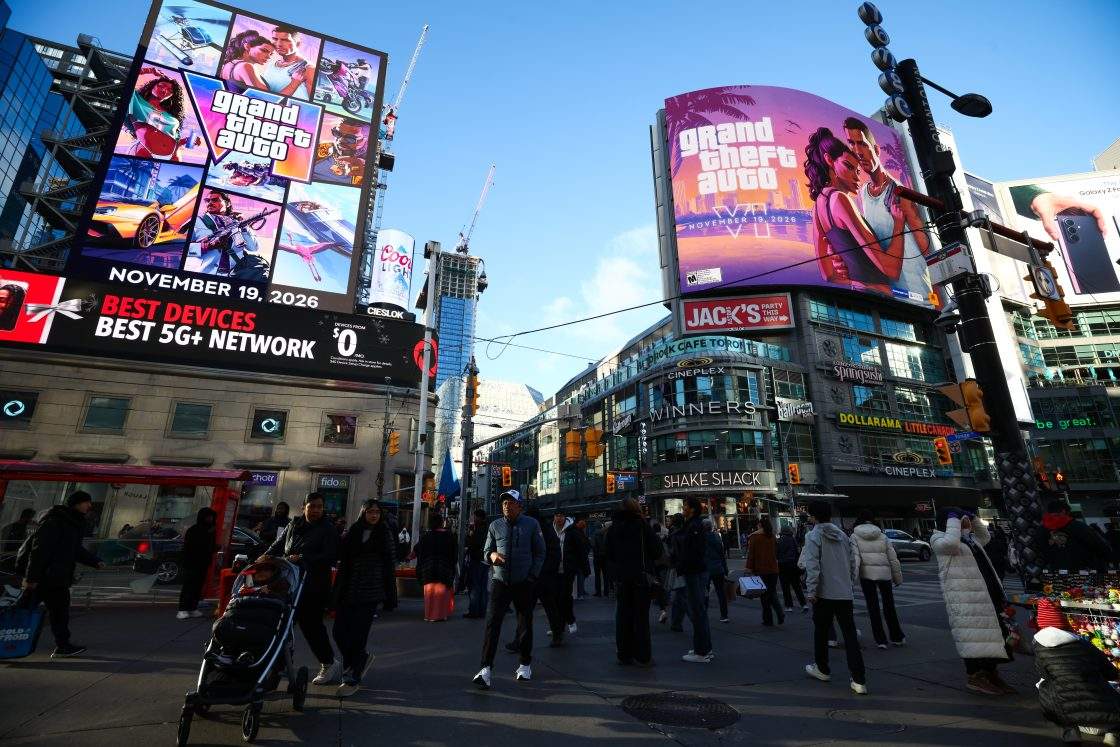
You don't spend over a decade waiting for a piece of media without expecting it to rewrite the rules. When Rockstar Games locked in the release date for Grand Theft Auto VI, the entire entertainment industry braced for impact. We aren't just talking about another video game hitting shelves. We are looking at a cultural earthquake that's altering workplace schedules, retail supply chains, and how billions of dollars flow through digital entertainment.
If you think this is just about driving fast cars and escaping a virtual police force, you're missing the bigger picture.
The Bonnie and Clyde Dynamic That Changes Everything
For the first time in the modern era of the franchise, Rockstar is putting a duo at center stage: Lucia Caminos and Jason Duval. Lucia makes history as the series' first female protagonist, steering away from the isolated lone-wolf antiheroes of past decades. Set against the sun-scorched, neon-drenched backdrop of Leonida—Rockstar's satirical spin on Florida anchored by a modern Vice City—their story leans heavily into a modern criminal thriller vibe.
Gameplay previews reveal a granular level of interaction between the two leads. You aren't just switching characters on a whim; you're managing a relationship while scoping out alternative entry points for heists, dealing with an overhauled police wanted system that tracks your specific clothing and vehicles, and navigating a criminal profile that reacts to your tactical choices. It's messy, it's personal, and it feels a lot more alive than anything we saw back in Los Santos.
The Sound of Vice City
Music has always been the heartbeat of this franchise, but the audio footprint for this release is operating on an entirely different frequency. French electronic icons Justice composed three hours of original score for the game, collaborating with artists like Tame Impala and SZA.
Track singles like "Flower in a Hurricane" point toward an eclectic, moody soundtrack that blends gritty electronic soundscapes with the
Why Grand Theft Auto VI is Breaking the Entire Entertainment Industry
gaming
Rockstar Games doesn't just release video games. They drop cultural anchor points that shift how billions of dollars move across the entertainment sector. When you look at the sheer scale surrounding Grand Theft Auto VI, the numbers look like defense budgets rather than entertainment budgets. Industry analysts project development and marketing expenditures to clear the two billion dollar mark, making it the most expensive media project in history. But the real story isn't just about how much money Rockstar spent. It is about whether a single piece of software can live up to expectations that have been compounding for over a decade.
If you lived through the launch of Grand Theft Auto V back in 2013, the landscape looks completely unrecognizable now. Back then, streaming music was still finding its footing, TikTok didn't dictate viral audio trends, and gaming was still fighting for mainstream cultural legitimacy against traditional cinema. Today, Grand Theft Auto VI arrives in a fractured media ecosystem where attention spans are measured in seconds, yet millions of players will willingly drop dozens of hours into a single virtual map.
The Duo Driving the Chaos
Jason and Lucia. Those are the names driving endless speculation across internet forums and industry breakdowns. Moving back to a dual-protagonist structure after the triple-threat chaos of Michael, Franklin, and Trevor makes total sense from a storytelling perspective. It mirrors the classic Bonnie and Clyde dynamic, but through a modern, hyper-satirical lens that only Rockstar's writing team can pull off.
What gets lost in the character hype is how Rockstar handles physics and simulation upgrades. Rumors and early developer insights point toward a massive leap in non-player character intelligence. In past iterations, pedestrians felt like window dressing once you interacted with them too aggressively. The technical ambition behind Grand Theft Auto VI aims for reactive crowds that remember your actions, local economies that shift based on player interference, and police behavior that moves away from psychic tracking and toward tactical containment.
You aren't just walking through a pretty digital recreation of Vice City. You are navigating a simulated ecosystem designed to push back against you at every turn. That level of detail requires serious processing power, which explains why console optimization has pushed hardware limitations to the absolute edge.
The Billions at Stake and the Media Ecosystem
When a product costs this much to build, failure is mathematically not an option. Take-Two Interactive has structured its fiscal projections around this single launch for years. Wall Street treats Rockstar releases like macroeconomic events. Movie studios actively dodge the release window because they know oxygen in the cultural room will completely vanish the moment the servers go live.
Think about the music industry angle too. Being featured on a fictional radio station inside a Grand Theft Auto title used to be a nice badge of honor for independent artists and a massive payday for mainstream stars. Now, with the integration of streaming culture and in-game curation, a slot on a popular digital dial can revive a dormant career overnight or break an underground artist into global stardom. Record labels are quietly fighting behind the scenes for placement because the youth demographic that consumes this franchise largely ignores traditional terrestrial radio and standard music television.
What Most People Get Wrong About the Hype
Every time a new installment approaches, internet commentators lose their minds over graphical fidelity upgrades. They pixel-peep trailers for reflection textures and tire tread marks. They miss the forest for the trees.
Rockstar's true superpower has never been raw graphical horsepowers. It's world-building satire. The genius of the franchise lies in its uncanny ability to hold up a distorting, hilarious, and often uncomfortable mirror to modern American culture. Social media influencers, cryptocurrency grifters, extreme livestream culture, and hyper-gentrified coastal cities are all prime targets for the studio's biting humor. The real reason people care isn't because the water physics look photorealistic. They care because the game usually captures the absurd anxiety of living right now better than any prestige television drama.
Navigating the Launch Madness
If you plan to dive in on day one, temper your expectations regarding server stability and technical patches. A release of this magnitude always bends internet infrastructure. Avoid looking up leaks or spoiler breakdowns on social media feeds because trolls will inevitably ruin the narrative twists weeks before launch day.
Clear your schedule, ignore the day-one hot takes from streamers rushing for views, and let the virtual world unfold at its own pace. Rockstar is setting a new high-water mark for interactive entertainment, and you only get to experience a shift like this once every ten to fifteen years.